Screen Reader Audit
Summary
An accessibility audit of a small real estate website using the NVDA screen reader, with personas, findings, and recommendations shared with the business owner.
- Client
- Carter Real Estate
- My role
- Accessibility Researcher and UX Designer
Results
- The business owner made fixes to the site based on the audit
The problem
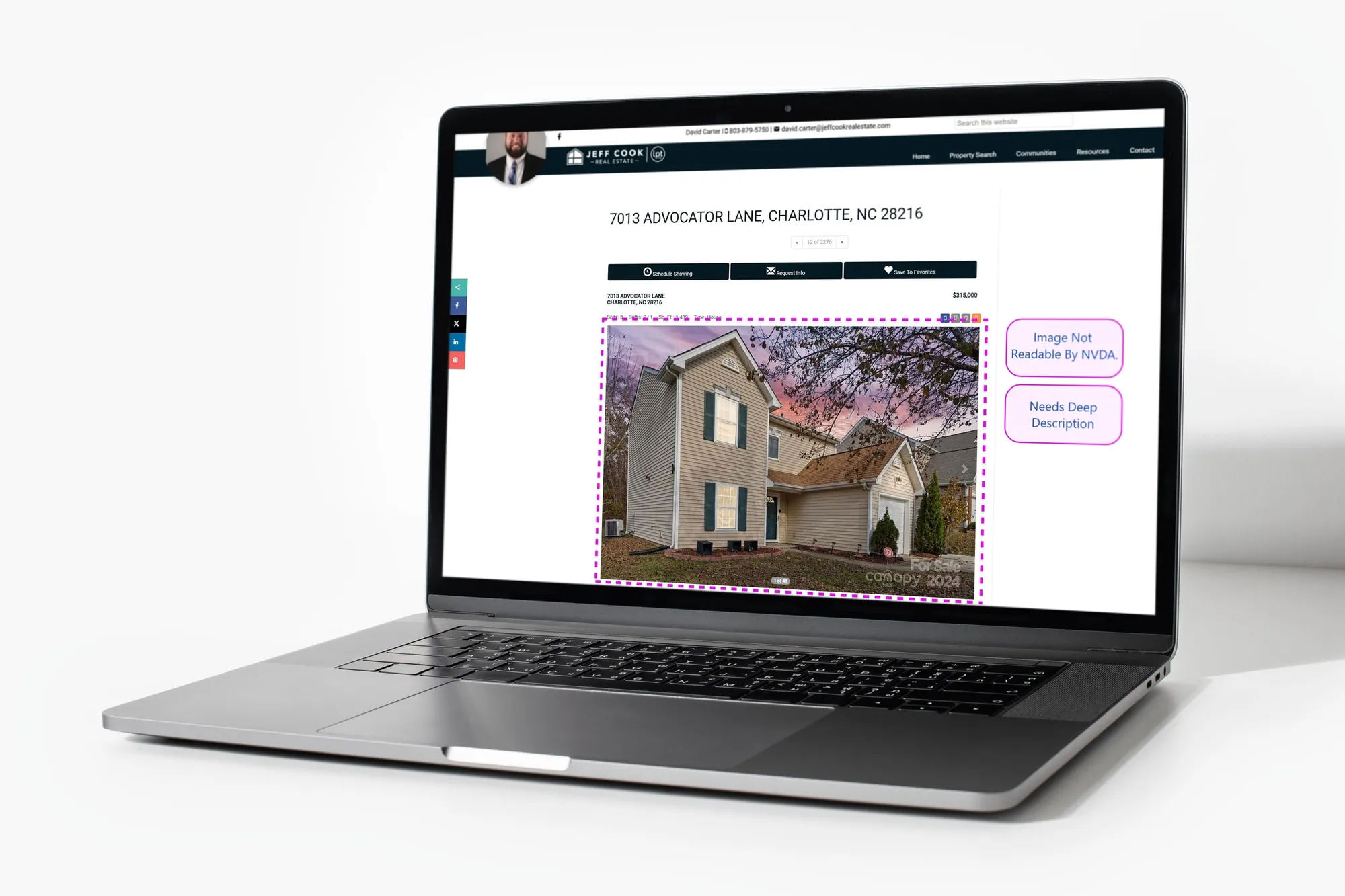
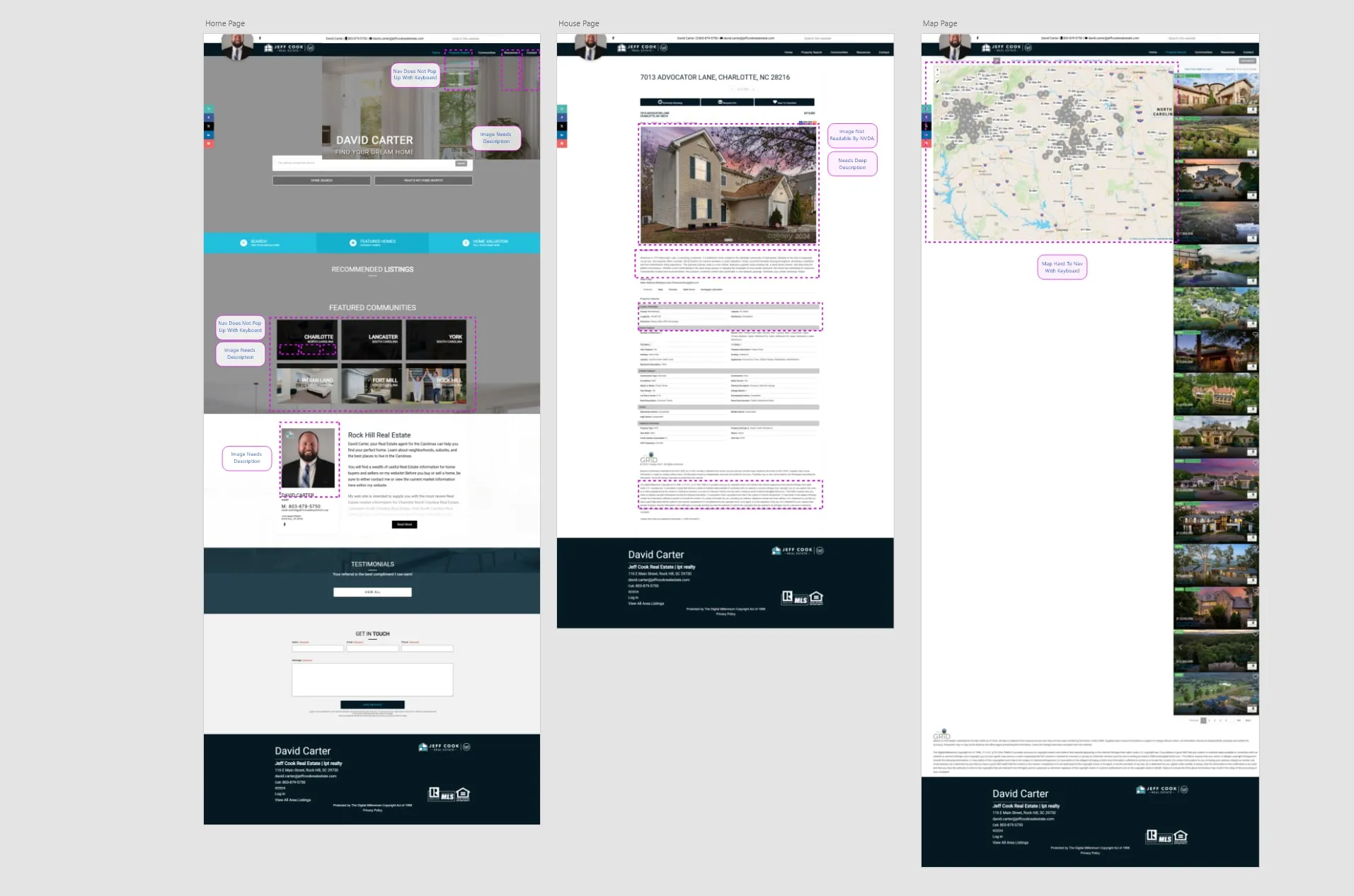
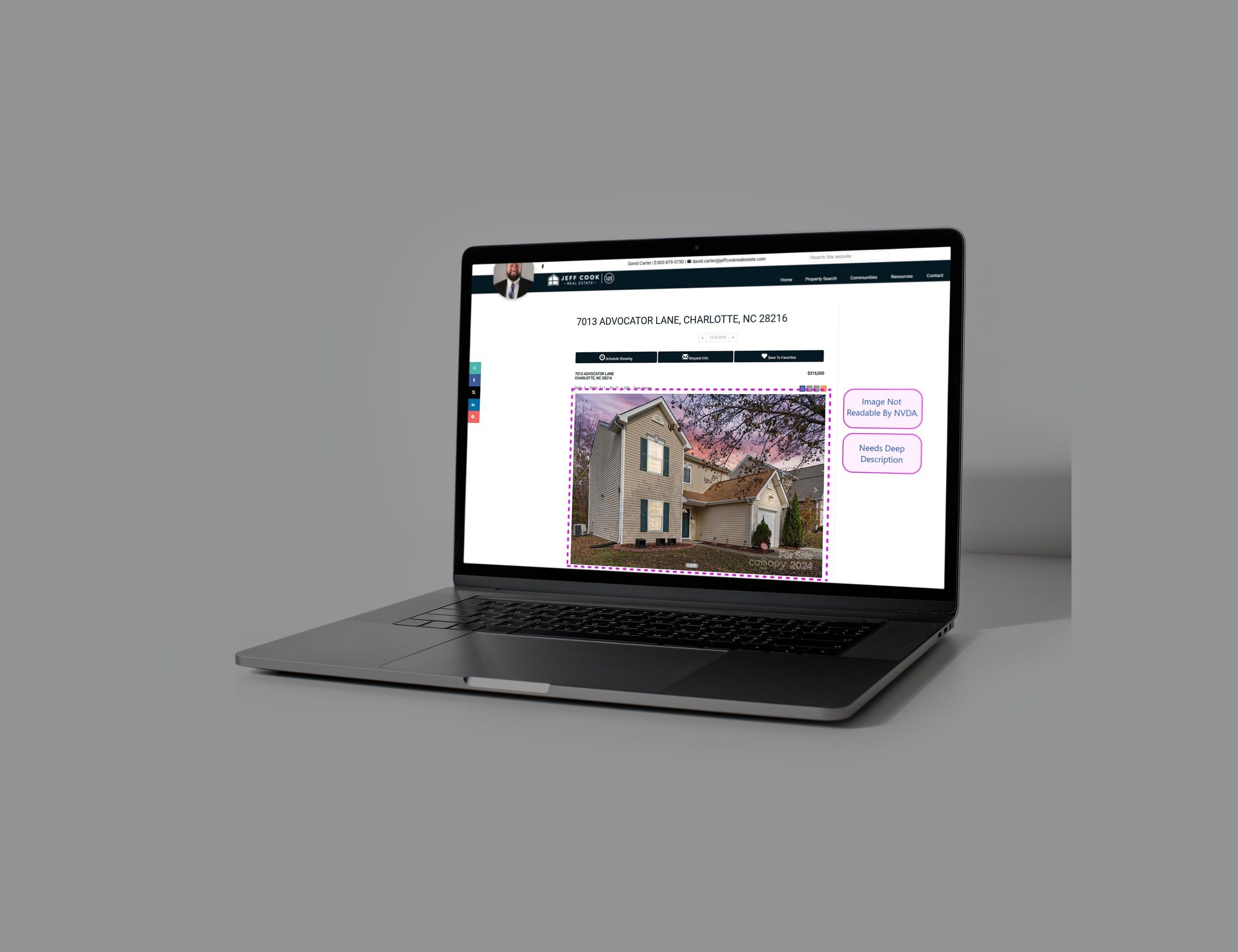
The Carter real estate website presented serious barriers for visually impaired visitors who rely on screen readers like NVDA and JAWS. Property images had no alt text, so a screen reader couldn’t describe them. Map elements were hard to use with a keyboard. Agent photos had no description beyond a name. And some navigation was hidden from standard keyboard tab controls.
Tested with NVDA, the site felt like viewing it through foggy glasses: an incomplete, disjointed experience that kept visually impaired users from browsing properties, finding key information, or making informed decisions.
My role
I planned and ran the audit, created the personas, documented the findings, and presented recommendations to the business owner.
The approach
Personas. I developed three personas representing people who may meet accessibility barriers: Maria, a visually impaired schoolteacher who uses JAWS and keyboard shortcuts; Greg, a first-time homebuyer with limited fine motor skills who navigates with NVDA and a keyboard; and Edward, a retired librarian with mild visual impairment who uses magnification and voice navigation.
Testing. Using NVDA, I tested the core tasks — browsing property listings, using maps, and moving through the site with keyboard controls only. Simulating real-world scenarios, like browsing without sight or without a mouse, revealed missing alt text, difficult navigation, and inadequate labeling.
The result
I presented detailed findings and actionable solutions to the business owner, and demonstrated the screen reader software and tools behind inclusive web design. We walked through how Maria, Greg, and Edward would struggle with features like missing alt text and keyboard barriers.
Many issues can be fixed with thoughtful design updates. Others are industry-wide — MLS listings, for example, often lack descriptive data for their photos — which shows the need for broader accessibility efforts. The business owner made fixes to the site based on the audit — a reminder of how much collaboration matters in making inclusive changes.